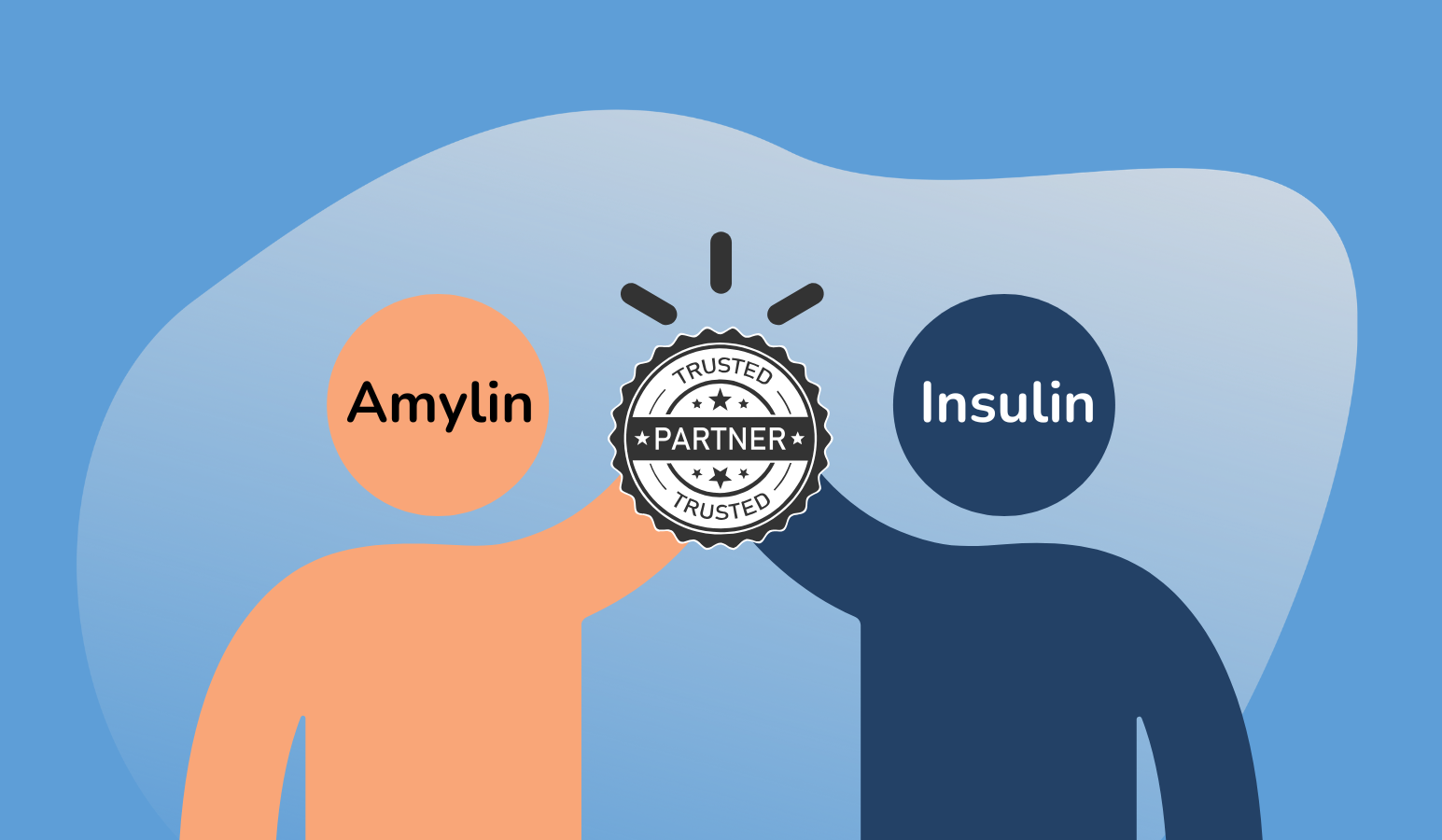
Discussions of diabetes typically focus on insulin, which is made by the beta cells in the pancreas. Notably, the beta cells also make another hormone called amylin. Indeed, these cells secrete amylin into the bloodstream whenever they secrete insulin. The hormone has several effects. It acts on alpha cells in the pancreas to inhibit their secretion of a hormone that raises glucose levels called glucagon. It also acts on the brain to reduce appetite and increase a sense of satiety and on the stomach to slow its emptying of food into the gut. These effects help to reduce the increase of glucose levels after eating and work in concert with insulin which lowers glucose levels.
These effects of amylin have led scientists to study whether it can be given to people with diabetes to control glucose levels. But first, they had to solve a challenging problem in chemistry. When human amylin is injected into the body it has a tendency to accumulate in useless, and potentially harmful clumps called amyloid. This is related to the high concentration or amount of amylin at the site of injection, and does not occur with the low concentrations of amylin that naturally circulate in people without diabetes. A similar problem occurs when the beta cells of people with diabetes are stimulated to make and secrete insulin to lower glucose levels. The increased amylin that is made at the same time can sometimes form amyloid within the cells because of the high concentrations. This can damage the beta cells and accelerate progression of diabetes.
The tendency of amylin to form amyloid led scientists to modify the amylin molecule. The modified molecule has the effects of amylin but does not make amyloid. It is this new molecule that was tested and eventually approved to treat diabetes. Pramlintide is the most commonly used version of this modified amylin molecule.
The story of amylin is a good example of how understanding normal physiology can lead to better treatments for people with diabetes.
About the author

Eamon Fitzpatrick
Eamon is a graduate student at the University of Alberta, working as part of the Alberta Diabetes Institute. Eamon’s research is focused on how Human Islet Amyloid Polypeptide (hIAPP, a.k.a. amylin) aggregation impacts the blood vessels of the islet. He hopes to understand the cellular mechanisms of amyloid damage, so that future research can find ways to circumvent this damage and improve islet health in diabetes.

articles

Diabetes Basics Part 8: What Tools Can Effectively Lower Glucose Levels?
Several blogs on this platform discuss the role of modest changes in diet, physical activity, weight, and the benefit of CGM for achieving good glucose levels. These represent the foundation upon which an optimal regimen can be built, and like any foundation, it needs to be firm. Other blogs discuss specific glucose lowering drugs. This...
articles

How Well Will a Particular Drug Work for You?
Before most new drugs are approved by governments for the treatment of diabetes (or any disease for that matter) they need to be tested in large numbers of patients within randomized controlled trials. For diabetes, these trials compare the effect of taking these drugs versus a placebo or an alternative drug on glucose levels, hypoglycemic...
articles

Why Blood Sugar Control Can Be Different for Males and Females
Differences exist in how the male and female body controls blood sugar levels. These differences are present in everyone, but they’re especially important to understand for people with type 2 diabetes (T2D). These differences can affect how likely someone is to develop T2D and how well their treatments work. Generally, females are somewhat less likely...