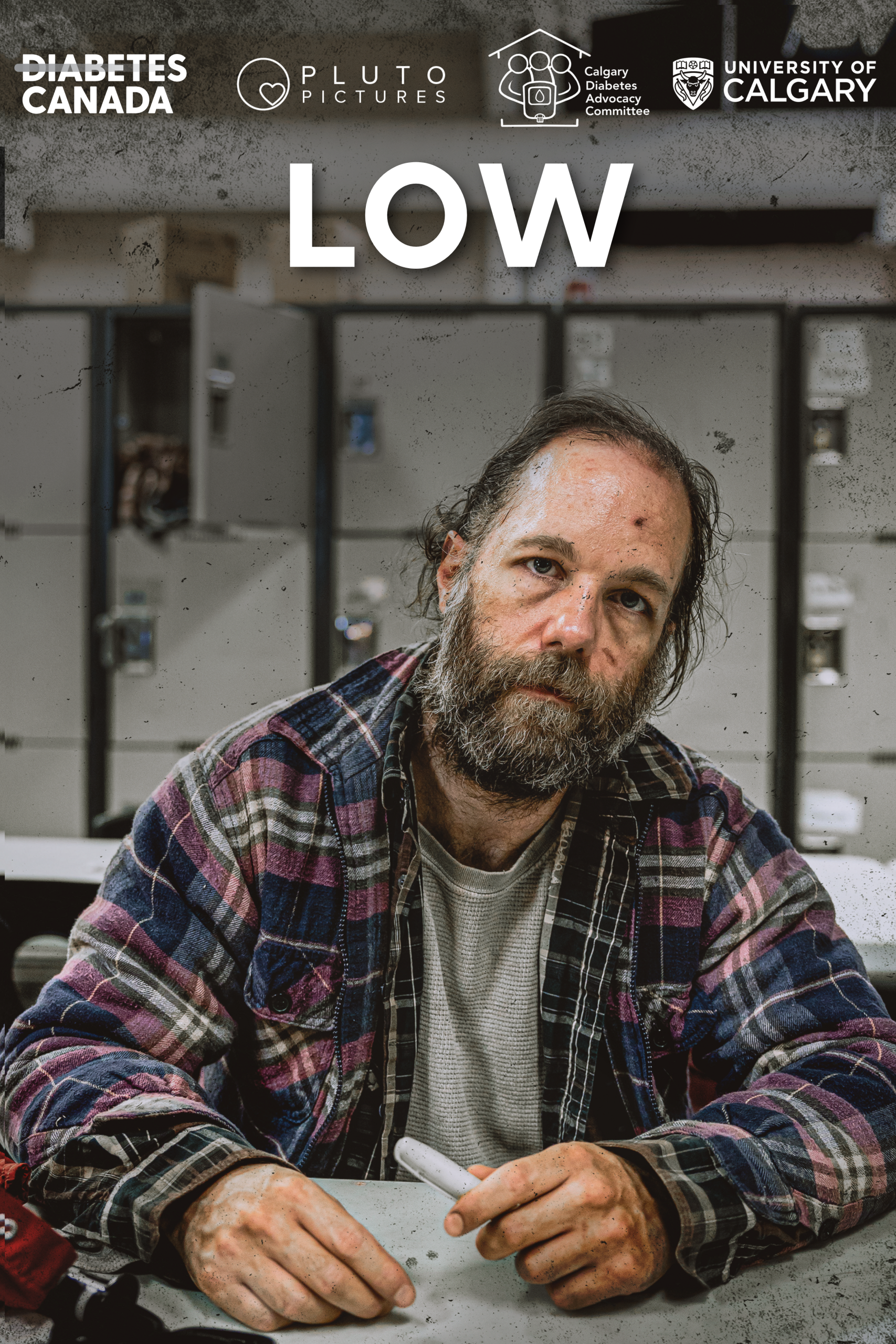
Managing diabetes can be challenging under the best of circumstances. For people experiencing homelessness, it can be even harder. Finding food, storing medications, getting to appointments, and simply getting through the day can all affect a person’s ability to manage diabetes.
Low brings these realities to the screen through the stories of people who have lived them.
What is Low?
Low is a narrative film based on the lived experiences of people with diabetes who have experienced homelessness. The film follows Bobby, who is trying to manage his diabetes while experiencing homelessness, and Annika, an emergency shelter worker dealing with the challenges of the opioid crisis. Throughout the film, people with firsthand experience and a diabetes specialist share their stories, insights, and ideas for change.
Low offers a powerful and realistic look at the challenges of managing diabetes while staying in an under-resourced emergency shelter. The story is informed by research and the lived experiences of the Calgary Diabetes Advocacy Committee (CDAC), a group that leads community-based research and advocacy to improve the experiences and health of their peers.
What does Low show us about diabetes and homelessness?
Many things can affect a person’s ability to manage diabetes: Low shows how living in a shelter and experiencing homelessness can make every day diabetes tasks and following diabetes recommendations much more difficult.
Stigma matters: The film shows how stigma and assumptions about diabetes and homelessness can affect how people are treated and cause real harm.
People with lived experience can help us see things we might otherwise miss: Through the voices of people who have experienced diabetes and homelessness firsthand, Low helps us understand the real-life challenges that can make diabetes difficult to manage.
Things can be done differently: Low also shows ways that shelters and other services can better support people living with diabetes.
Why should I watch Low?
Low offers a powerful look at what it takes to manage diabetes when a person’s circumstances make diabetes recommendations difficult, or sometimes impossible, to follow.
Watching Low is an opportunity to:
- Understand how a person’s situation and surroundings can affect their ability to manage diabetes, even when they know what they are expected to do.
- Recognize how stigma and assumptions about diabetes and homelessness can affect people’s experiences.
- Learn directly from people who have experienced diabetes and homelessness about the challenges they face and the changes they believe are needed.
- Think about what could be done differently in diabetes care, research, education, advocacy, and support.
Low invites those of us who are familiar with diabetes to look beyond what a person is expected to do to manage diabetes and think about what it actually takes to do it. As you watch, consider shifting the question from “Why isn’t this person following their diabetes recommendations?” to “What is making these recommendations difficult to follow, and what could be done differently?”.
Click here to watch the film Low
About the author
Sarina Aryal
Sarina Aryal (BHSc, MSc) is a PhD student in Community Health Sciences whose research focuses on advancing health equity through community-based participatory research. In partnership with people with lived experience, researchers, healthcare professionals, and community organizations, she co-develops innovative projects, including participatory filmmaking and digital knowledge mobilization initiatives, to drive meaningful change in diabetes care and other areas of health inequity.