Glucose is a simple sugar molecule or carbohydrate that is present in many foods. It exists as either single glucose molecules or in combination with other molecules. Like other animals, humans use glucose as a form of energy. Glucose molecules circulate through the body and provide the energy that the brain, muscles, fat and other organs need to properly function. Indeed, the brain is the biggest user of glucose in humans. Without sufficient glucose levels through the circulation, the brain and other organs will die within a few minutes. Glucose is therefore a crucial molecule for health. Not enough in the blood (hypoglycemia) can be fatal; too much (hyperglycemia and diabetes) cam cause serious health problems. The body has many tools to keep the levels with the barrow range of 4 to 8 mmol/L.
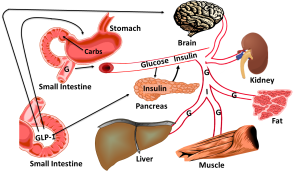
Glucose enters the body with food (Figure). After food is broken down by the stomach and small intestine, the glucose molecules are absorbed. They first go to the liver, which stores some of the glucose as starch, and allows the rest of it to enter the circulation. Once in the circulation, the level of glucose is closely monitored by cells in the pancreas called beta cells. Levels above 4.5 mmol/l stimulate the beta cells to make and secrete insulin into the circulating blood. The insulin then lowers the level by promoting removal of glucose from the bloodstream by muscle, fat, and other organs. It also signals the liver to keep all its stored glucose from entering the blood.
The main signal to make insulin is the glucose level. This signal is magnified by another hormone called GLP-1 (which stands for glucagon-like peptide-1). This hormone is made by the intestine when food enters the intestine and signals the beta cells to make more insulin. It also signals the body that food is being eaten by telling the brain to reduce appetite, and the stomach to retain the food until it is digested. This helps reduce overeating and prevent high glucose levels.
Insulin is the key signal to lower glucose levels. When it goes too low, several hormones signal the liver to secrete some of the stored glucose into the blood. These include glucagon, steroids, and adrenaline. Once glucose rises above 4.5, levels of these hormones fall as those of insulin rise. Diabetes develops when the beta cells of the pancreas are unable to make enough insulin to keep the glucose from rising.
Figure: Controls for Glucose Levels
Legend: G – glucose; I – insulin; Carb – carbohydrate
The next blog in the series discusses the definition of diabetes in more detail.
About the author

Hertzel Gerstein
Hertzel is an endocrinologist and professor at McMaster University who is in high demand as a speaker, advocate, and educator on diabetes-related topics. His research focuses on using large, international randomized trials to identify and test new ways of preventing type 2 diabetes, reducing serious health outcomes like strokes and death, and achieving type 2 diabetes remissions.

articles

Type 2 Diabetes: The “Perfect Storm”
Have you ever heard of a perfect storm? It’s when several bad weather conditions crash together at the exact same time, creating a huge disaster. Doctors often use this idea to describe how Type 2 diabetes develops in the body. Type 2 diabetes is a condition where your body has trouble controlling the amount of...
articles

Why Isn’t the Drug Doing What My Doctor Said It Would Do?
Drugs are prescribed to people with diabetes for a variety of reasons. These include the following: To keep blood sugar levels from rising too high To minimize the risk of low blood sugars or hypoglycemia To promote weight loss or prevent weight gain To reduce the risk of serious health problems in the future that...
articles

The Connection Between Thyroid Disease and Diabetes
How do thyroid problems affect people with diabetes? The thyroid is a butterfly-shaped gland in your neck that makes hormones essential for many bodily functions, including metabolism, heart rate, and body temperature. When the thyroid produces too much hormone, it’s called hyperthyroidism, and when it makes too little, it’s called hypothyroidism. People with diabetes, especially...